
In honor of America's 250th anniversary, discover how civil engineers shaped the contours of our country's storied history.

Infrastructure forms the backdrop of our daily lives.
From commutes and roadtrips, to freight travel and trade, bridges have always played a seminal role in the way our country operates.
In celebration of our nation’s history, let’s explore the story of America’s great bridges. By tracing the arc of civil engineering, from the industrial revolution to modern day, we’ll discover the ways bridges connect us through time, and how they paved the way for a flourishing USA.
Meet our founding father, a prodigious engineer who led the design of some of our nation’s most iconic structures.
Born in Poland in 1861, Ralph Modjeski showed an early drive for mathematics, and after immigrating to San Francisco in 1876, he would eventually return to Europe to study at the prestigious École des Ponts et Chaussées.
After graduation, he sought American citizenship and would go on to become a key player in his adopted home’s industrial coming of age.
Read on to discover how bridge design was integral to American commerce at the turn of the century.
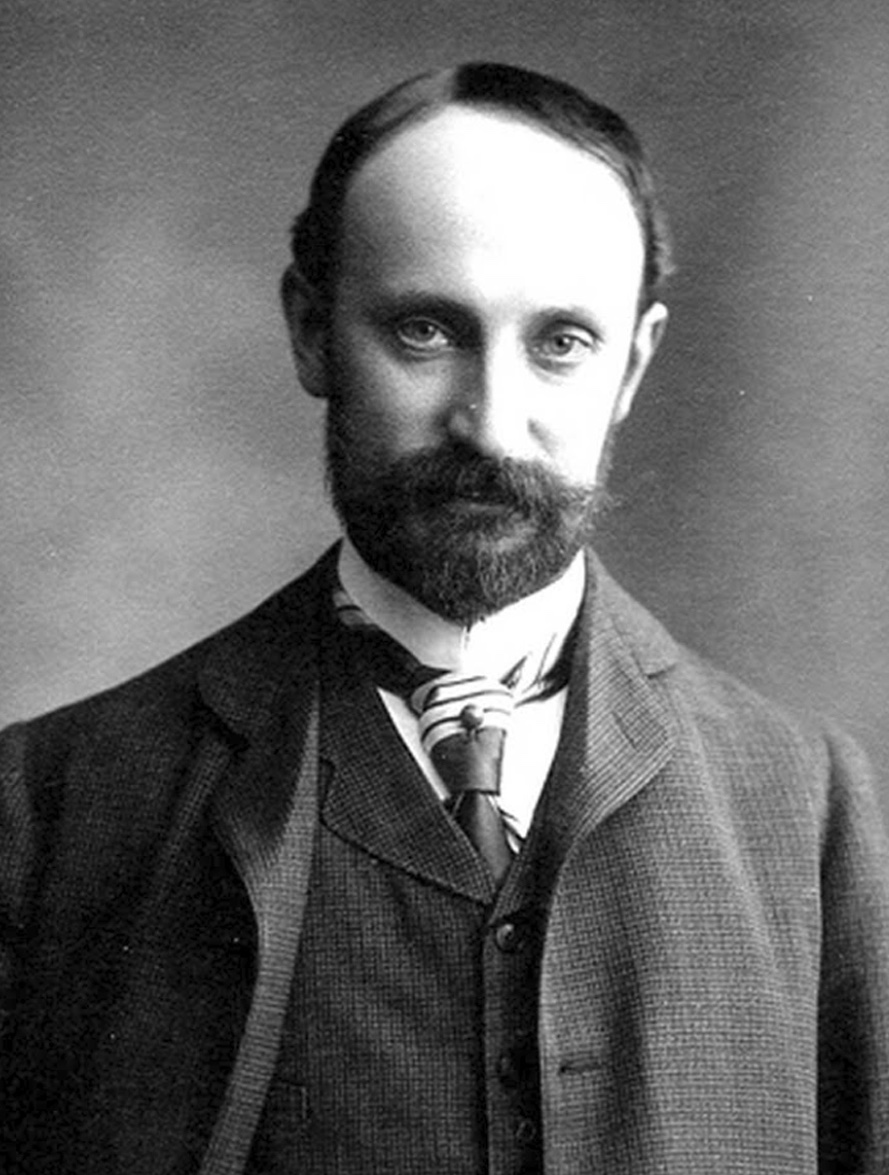
Ralph Modjeski
Meet our founding father, a prodigious engineer who led the design of some of our nation’s most iconic structures.
Born in Poland in 1861, Ralph Modjeski showed an early drive for mathematics, and after immigrating to San Francisco in 1876, he would eventually return to Europe to study at the prestigious École des Ponts et Chaussées.
American Icon
After graduation, he sought American citizenship and would go on to become a key player in his adopted home’s industrial coming of age.
Read on to discover how bridge design was integral to American commerce at the turn of the century.
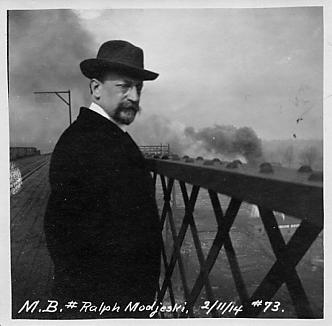
1893
Bridge engineers were some of the most prominent innovators of the age, traveling across the country to lend their minds to projects of remarkable scale. As westward expansion wound down, the nation’s energy turned inward toward connecting the continent. Alongside the rise of the railroad, bridge engineering evolved into the catalyst for a period of unprecedented growth.
Tens of thousands of miles of rail were being laid at a furious pace, supported by emerging techniques in steel bridge construction that would carry the immense weight of locomotives across gorges and ravines. It was a moment of opportunity for those with both the ambition and know-how to create the contours of a new world.
A Dangerous Job
Modjeski’s first major commission, the Government Bridge in Davenport, Iowa, faced a perilous winter when ice floes on the Mississippi River threatened construction. When the government dismissed his warnings to halt work, Modjeski proactively stationed a safety lookout upriver to protect his crew. This foresight saved many lives when the ice finally struck, giving workers just enough time to scramble to safety before a critical section collapsed into the river.
A Stunning Accomplishment
Refusing to let the disaster halt progress, Modjeski immediately engineered a brilliant workaround to keep the project on track for the spring. In a stunning feat of ingenuity, he designed, fabricated, and installed a temporary vertical lift using a spare rail truss — all in just four weeks’ time.
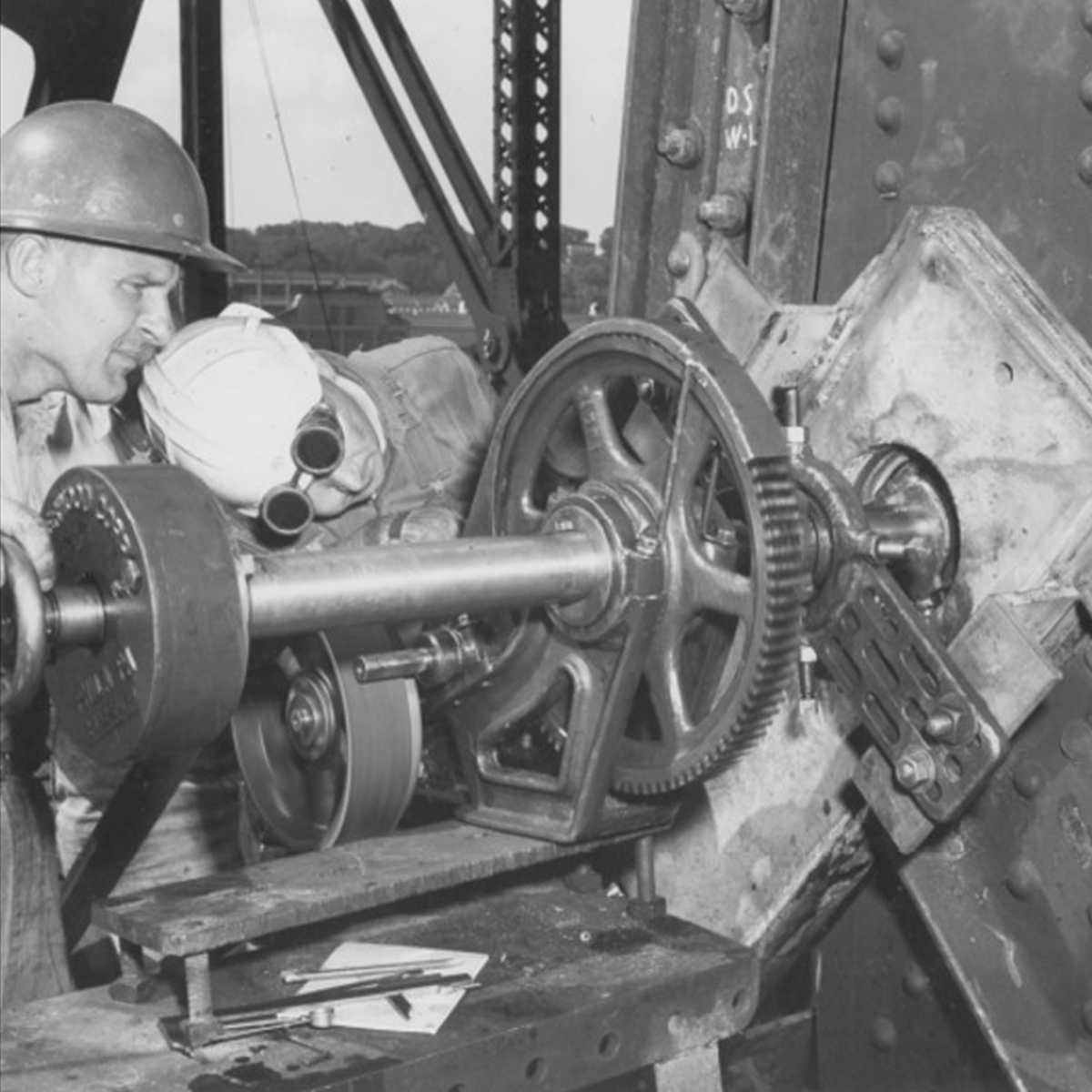
1920
In the years after the First World War, the railway boom gave way to roads. Henry Ford’s innovation had turned the automobile from a luxury to a necessity. Suddenly, families had more mobility and the freedom to decide where to go and when. Paved roads were direct lines to new jobs, distant markets, and long leisurely drives.
And more roads meant more bridges. The demand for new crossings surged, connecting regions and opening unprecedented opportunities. Engineers answered with ambitious plans for record-breaking bridges that would become national icons in their own right.
Let's Cross That Bridge
The Longest in the World
Bridge design was an exciting frontier. Each new project represented a unique challenge and an opportunity to go above and beyond what anyone had ever achieved.
Ralph Modjeski designed the Benjamin Franklin Bridge by applying Moisseiff’s “deflection theory” to determine the forces carried by the primary load-bearing elements. The bridge officially opened on the celebration of the nation’s 150th anniversary on July 1, 1926, becoming the longest suspension bridge in the world.
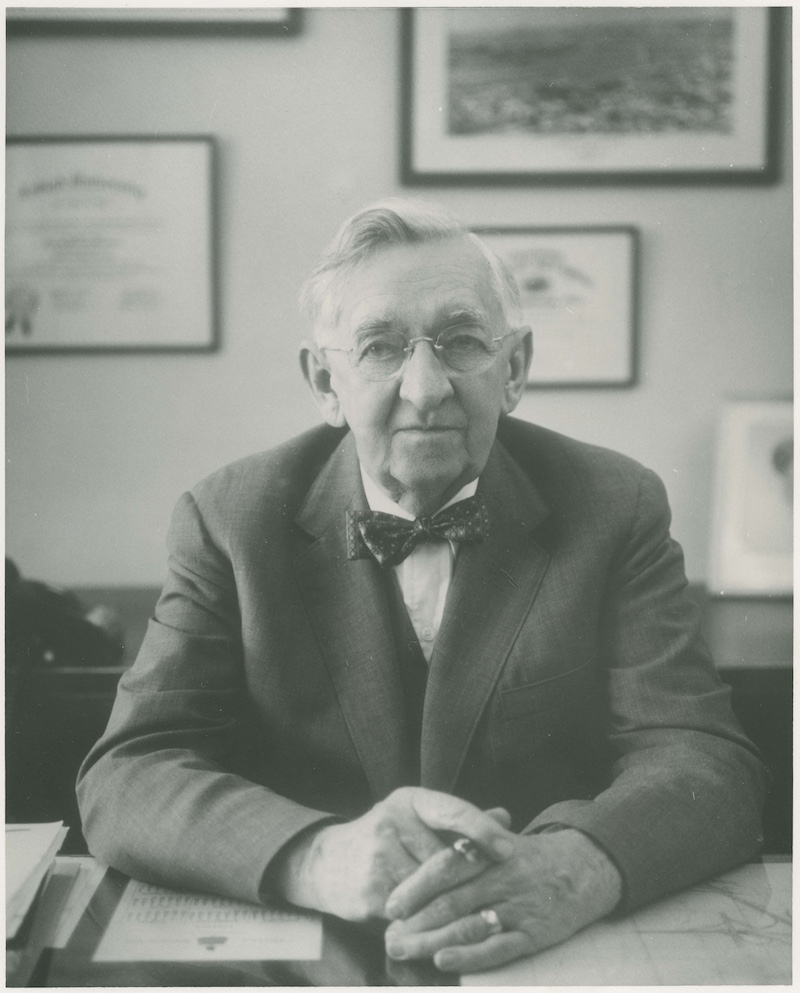
Frank Masters complimented Ralph Modjeski in many ways although they came from very different backgrounds. His American family ties dated back to before the revolutionary war, his modest upbringing was contained to Pennsylvania, and his educational aspirations were never realized beyond a single year at university.
Despite his humble beginnings, his skill would propel him through the industry, first as an inspector for a steel shop overseen by Modjeski, then as the manager of Modjeski’s New York office, and eventually as his partner in 1924.
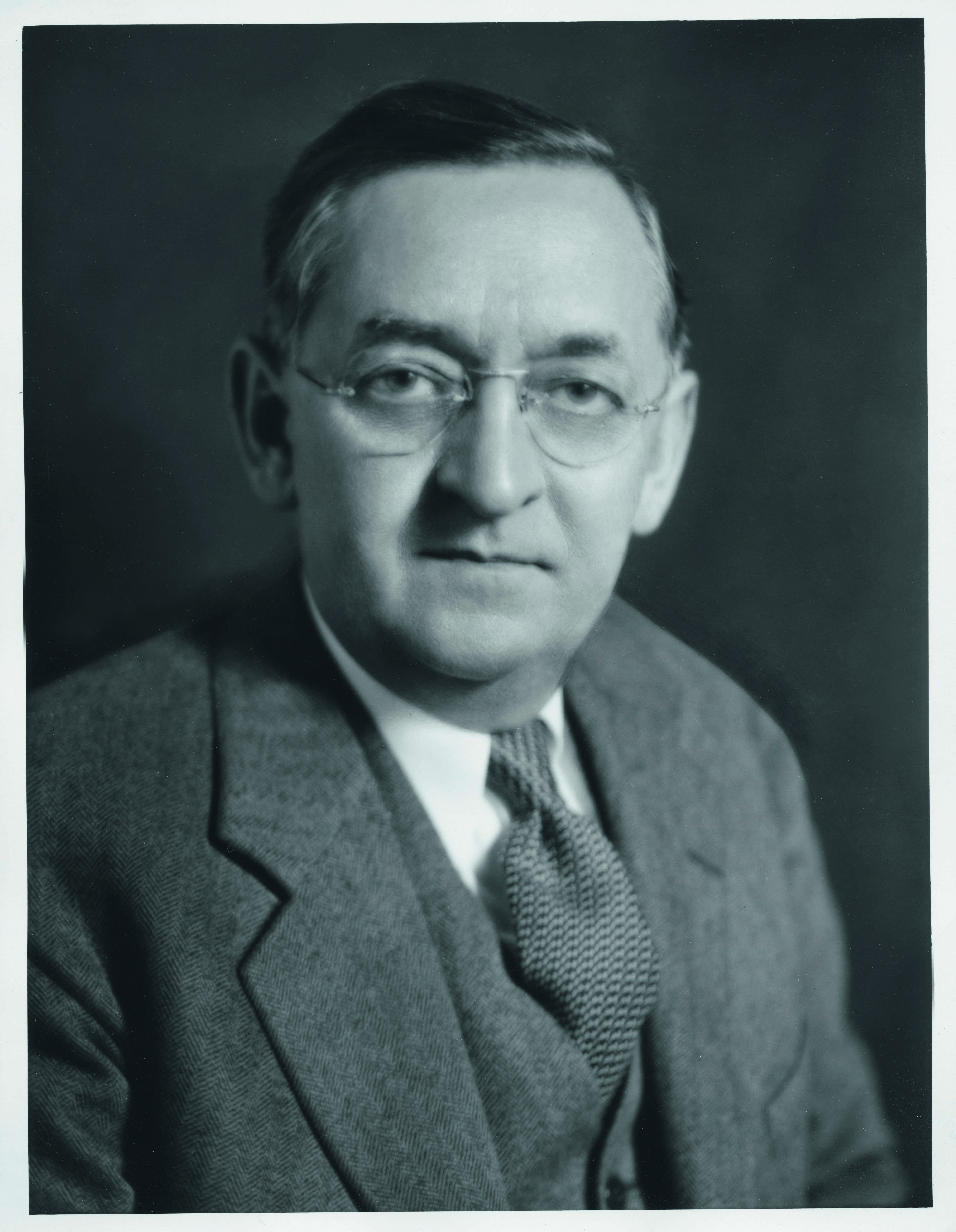
Frank Masters
Frank Masters complemented Ralph Modjeski in many ways although they came from very different backgrounds. His American family ties dated back to before the revolutionary war, his modest upbringing was contained to Pennsylvania, and his educational aspirations were never realized beyond a single year at university.
Through the Ranks
Despite his humble beginnings, his skill would propel him through the industry, first as an inspector for a steel shop overseen by Modjeski, then as the manager of Modjeski’s New York office, and eventually as his partner in 1924.
Did You Know?
The Great Depression
After the stock market crashed in 1929, the economy went into a tailspin. But the nation made the bold choice to keep building. Through the sweeping public works program in the New Deal, the federal government poured millions into the construction of massive dams, miles of highway, and stunning new bridges
In an era wracked with scarcity, these bridges were beacons that gave the public tangible proof that progress was still possible. The bridges built in this period were monuments to resilience in the face of hardship, striking examples of what’s possible through mobilization and cooperation.
1930
1950
Interstate Era
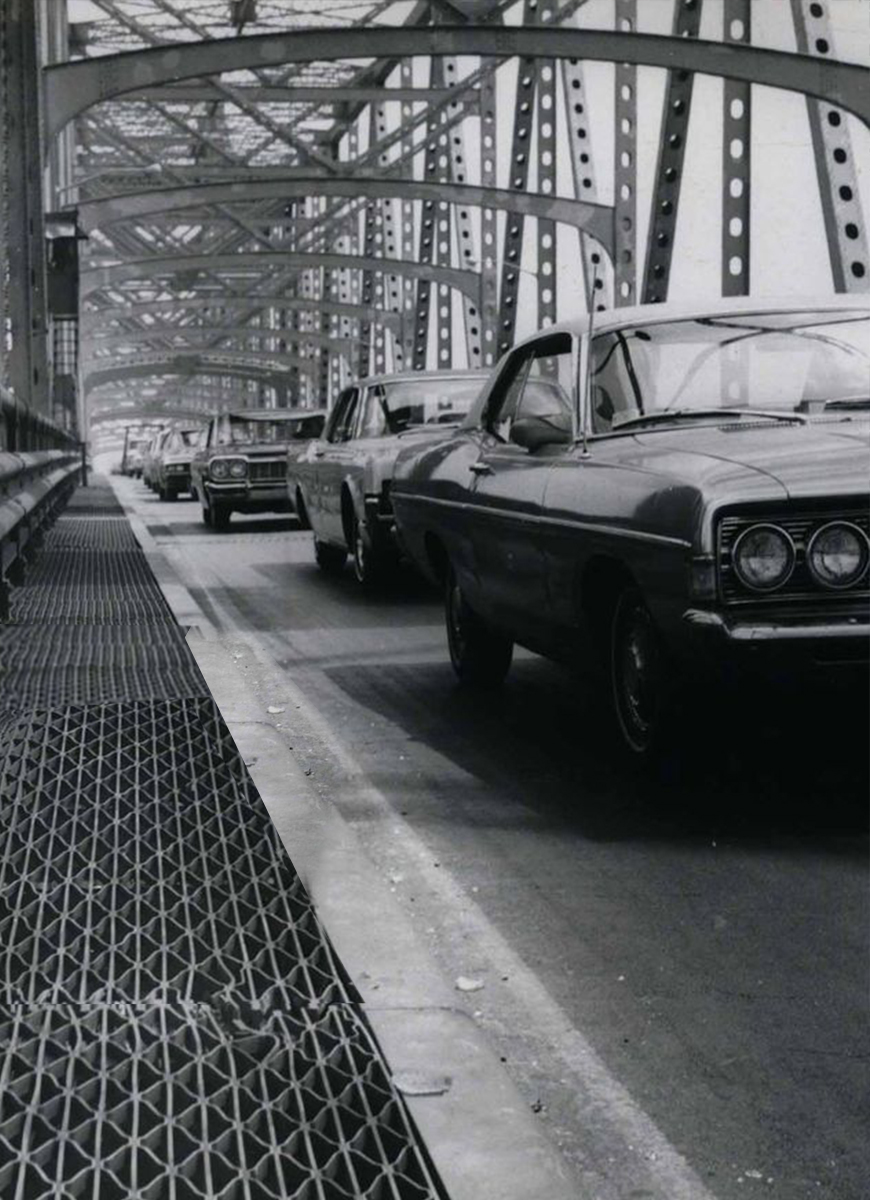
In 1956, President Eisenhower signed the National Interstate and Defense Highways Act, launching what would become the largest public works project in American history. In the decades that followed, more than 40,000 miles of highway would be laid across the country, redrawing the map of American life.
Cities spilled out into suburbs, the trucking industry grew into a force of national commerce, and the continent became connected end to end at a scale unprecedented by any other country in the world. Civil engineering in America has always been a frontier, an industry that rewards ingenuity and leaves permanent marks on the world that we share.
The American Roadtrip
For a nation whose national identity is tied up to personal liberty and independence, there was something fitting about the freedom to hit the road.
Did You Know?
Bridge engineering is as much about preservation as it is construction. Through advanced monitoring and inspection techniques, engineers work tirelessly behind the scenes on our nation’s invaluable transportation infrastructure to make what we have stronger, smarter, and safer for the next generation.
Our long-standing relationships with DOTs all over the country means we have the privilege of inspecting and maintaining bridges we helped design over the course of the last century. The integrity and ingenuity of our founders imbued these bridges with staying power, and we’re committed to carrying those values into our work for the next century and beyond.

.jpg)
The I Street Bridge
We serve as Engineer-of-Record for the movable span of the new I Street Bridge in Sacramento—the first-ever vertical lift span of its kind. Replacing a 110-year-old crossing, the 900-foot structure will carry traffic, bike lanes, sidewalks, and a future streetcar across the Sacramento River, reconnecting two cities. It proves that the American story is still being written one connection at a time.
America250
We’re proud to have been a part of that legacy for more than a century, and look forward to helping pave the way for the ever-unfolding American journey.